Focused hvac workflow builds start at $795See what you can buy
AI WORKFLOWS BUILT FOR HVAC OPERATIONS
Book more of the leads you already pay for—without making dispatch chase every handoff.
Praktos AI answers new calls, checks service rules, books approved work, fills schedule gaps, and follows open estimates inside the tools your HVAC team already uses.
Focused workflow builds start at $795. Connected systems are scoped around your tools, rules, and volume.
One workflow, one owner, one KPI Built around your existing software Human judgment stays human-owned
LIVE HVAC FLOWACTIVE
TRIGGERNo-cool call arrives after hours
CAPTUREIssue, location, equipment, and urgency recorded
CHECK RULESService area, on-call capacity, and technician skill checked
NEXT ACTIONApproved visit offered or dispatcher alerted
BUSINESS RESULTA booked job or a clear human-owned next step
You approve the rules, handoff, and success metric before anything reaches a customer.
Designed around the software hvac teams already know
Real platforms. No rip-and-replace pitch. ServiceTitan
 Housecall Pro
 Jobber
 FieldEdge
 QuickBooks
 HubSpot
 Zapier
 CallRail
FROM LEAD TO COMPLETED JOB
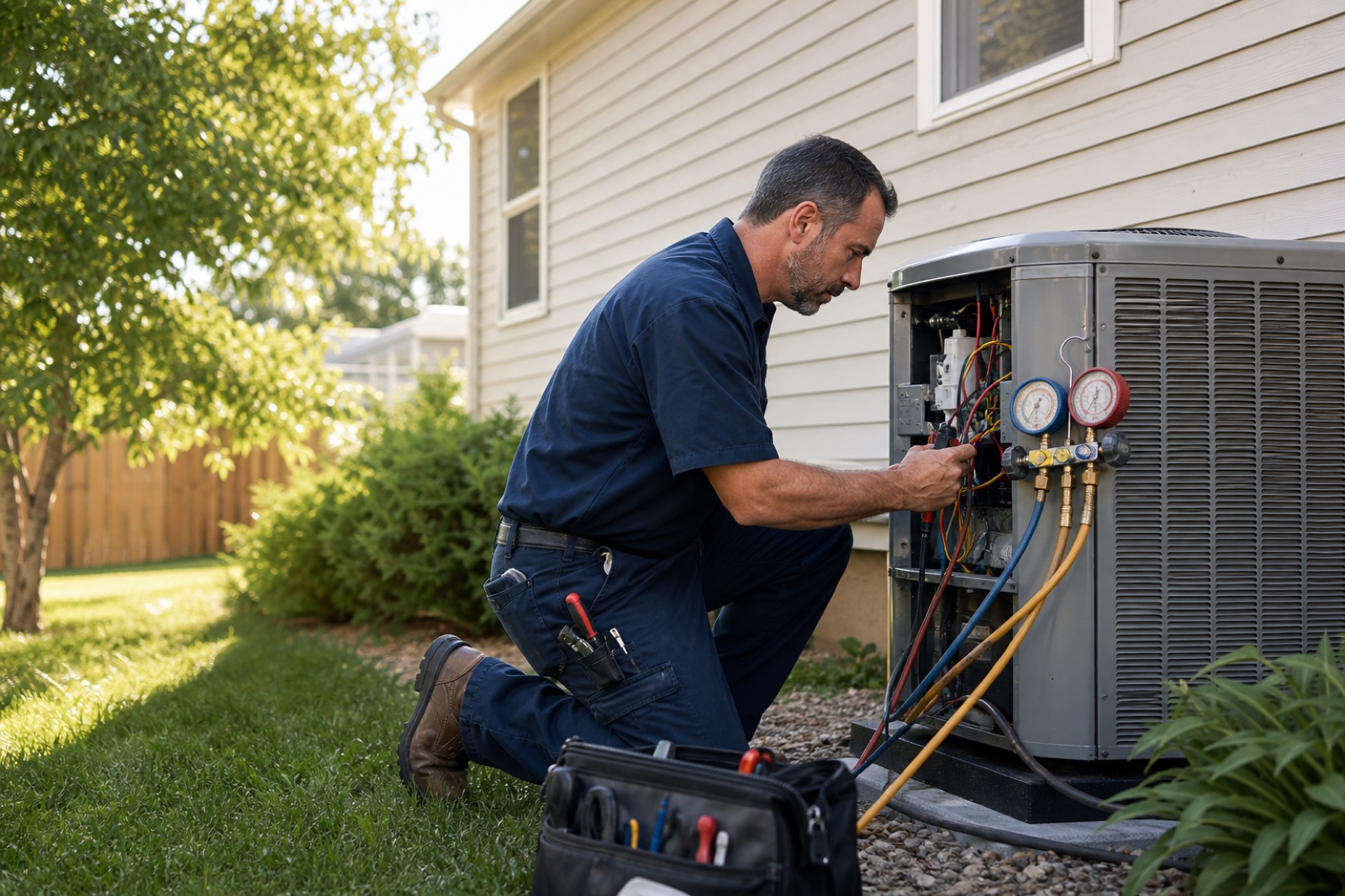
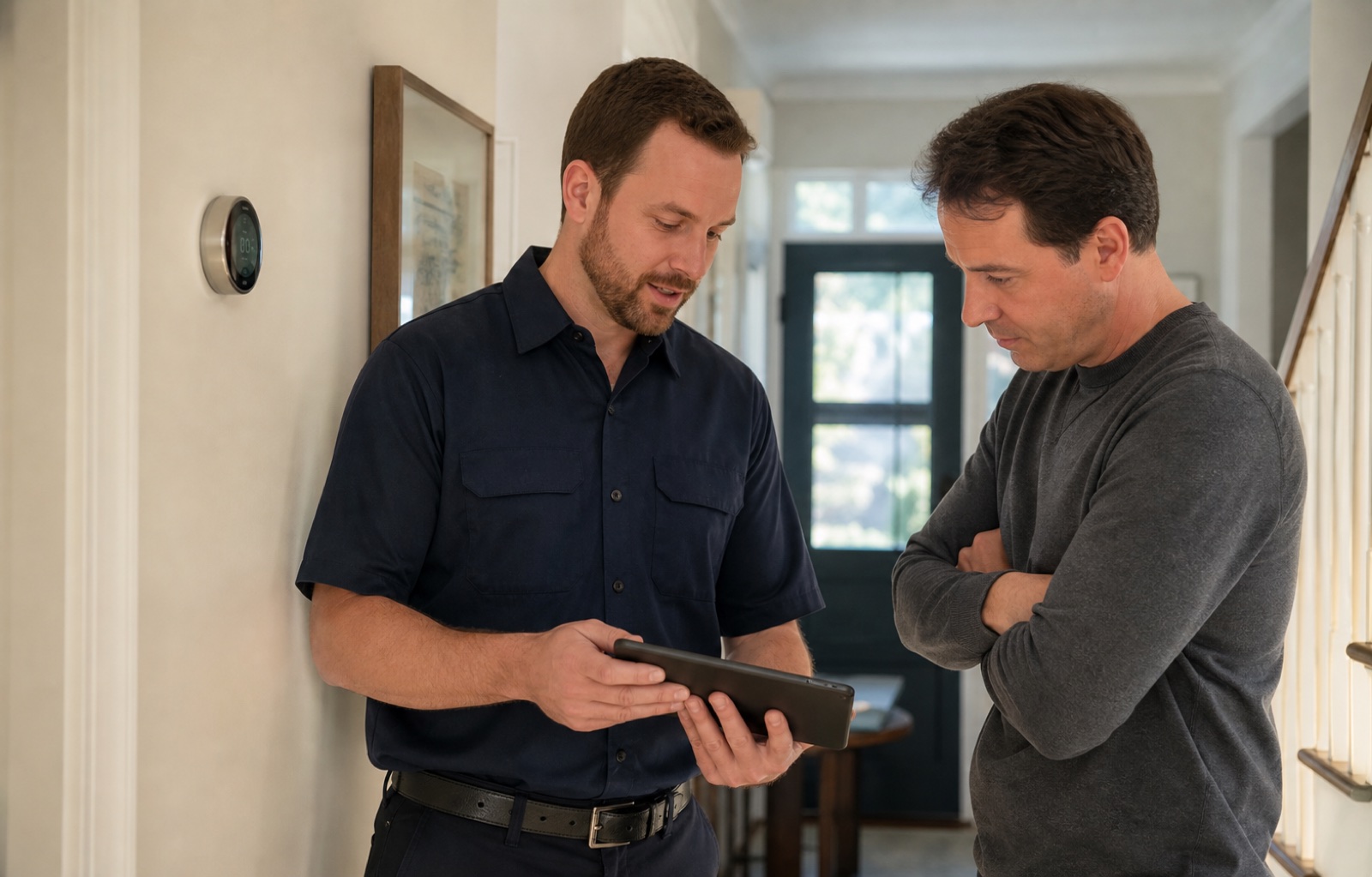
The customer gets a next step. The office keeps control.The technician gets the details.

HVAC CUSTOMER FEEDBACK
What changes when follow-up runs consistently.
Less admin. Cleaner communication. More consistent follow-up across the office and field.
“We average about 180 service calls a month, and automating customer follow-up saves our office hours every week. The biggest win has been consistency.”
 MichaelHVAC Owner
“With 12 technicians, communication matters. The workflow cut the back-and-forth between our office and the field and made every handoff visible.”
 AnnaHVAC Operations Manager
“We tracked roughly 6 hours of admin savings each week after the rollout. That's time we can actually use to grow.”
 JoshHVAC Business Owner
THE HVAC OPERATING LAYER
Every lead gets answered, acted on,and accounted for.
Each system starts with a real operational trigger, applies your approved rules, and ends with a visible outcome or human owner.
Answer and qualify every lead
AI responds across phone, text, and web, gathers the job details, and checks whether the request fits your service rules.
Every inquiry is booked, handed off, or marked with a reason.Protect the dispatch board
Availability, urgency, geography, technician skill, and on-call rules are checked before a slot is offered.
Nothing is booked outside the capacity and rules you approve.Work the existing pipeline
Open estimates, due maintenance, memberships, and past customers receive timely follow-up when capacity is available.
Outreach stops on reply or opt-out and brings warm responses to staff.The promise: no request disappears into an inbox, queue, or disconnected system.It moves, reaches a human owner, or shows the exact reason it stopped.
Run your numbers HIGH-VALUE HVAC WORKFLOWS
Automations that fill the schedule—not just answer the phone.
No generic chatbot list. These are real trigger-to-outcome systems designed around the work your team already performs.
CAPACITY RECOVERYSAMPLE RUN
Empty-Day Fill Autopilot
When a weekday has open maintenance slots, the system finds past customers who are due for service, sends a day-specific reminder with your approved promo code, books directly into that day, and stops outreach when the slots are full.
TRIGGERThursday has 3 open maintenance slots
MATCH27 past customers are due for service
ACTIONThursday-only reminder and promo are sent
STOPOutreach pauses as soon as all 3 slots book
BUSINESS RESULTRecover technician hours that would otherwise sit empty.
SAME-DAY RECOVERYSAMPLE RUN
Cancellation Slot Rescue
When a customer cancels, the system checks nearby jobs, customers who asked for an earlier appointment, technician skill, and drive time—then offers the opening and updates dispatch after someone accepts.
TRIGGERA 1:30 PM service call cancels
MATCH6 nearby jobs fit the technician and route
ACTIONThe earlier opening is offered by text
RESULTThe first accepted job fills the slot
BUSINESS RESULTKeep the truck productive without the office calling down a list.
FIELD-TO-OFFICE FOLLOW-UPSAMPLE RUN
Technician Notes to Revenue
When a technician closes a job, the system turns field notes into a customer-friendly summary, identifies unapproved recommendations, starts the approved follow-up, and alerts the office when the homeowner replies.
TRIGGERJob closes with 2 unapproved recommendations
BUILDA clear homeowner summary is drafted
FOLLOW UPApproved reminders start automatically
HANDOFFInterested replies reach staff with context
BUSINESS RESULTStop good repair and upgrade opportunities from dying in job notes.
YOUR LEAK, IN YOUR NUMBERS
What could consistent follow-up be worth each month?
Start with the hvac opportunities your team is not consistently working today. Change every input to match your real operation.
Open opportunities × re-engaged × booked × valueA simple model for deciding whether the first workflow is worth building.
USE YOUR NUMBERSMonthly opportunity model
Replace each starting value with a conservative number from your hvac companies operation.
OPEN40opportunities→RE-ENGAGED12responses→BOOKED4.8jobs
MODELED MONTHLY OPPORTUNITY VALUE$3,120Illustrative model, not a forecast. Use your own conversion rates, margins, and capacity before making a decision.
HOW IT GETS BUILT
Your rules first. Automation second.
The system earns trust by making every decision boundary, exception, and business result visible.
Map the real workflow
Document the trigger, current handoffs, tools, delays, and the number that should improve.
Define rules and boundaries
Agree what the system may do, what it must never do, and exactly when a person takes over.
Connect and test
Build against your current stack and test normal, duplicate, failure, opt-out, and exception paths.
Launch with visibility
Measure outcomes, review unresolved items, and expand only after the first workflow is reliable.
WHAT YOU CAN BUY
Start with one workflow. Expand only after it works.
Every engagement defines the trigger, approved actions, staff handoff, failure paths, and the number that should improve.
STARTING AT$795One working automation
Focused HVAC Workflow
Build and test one valuable workflow—such as empty-day fill autopilot—before committing to a larger system.
CONNECTED BUILDScopedCore operating loop
Connected HVAC Operations
Connect intake, approved decisions, customer communication, scheduling or workflow status, and staff takeover across your current stack.
FULL SYSTEMCustomEnd-to-end journey
HVAC Automation System
Build a staged operating layer across lead flow, service delivery, follow-up, exceptions, and management visibility.
Every build includesWorkflow and integration mapRules and staff handoffFailure-path testingOne KPI dashboard
WHERE AUTOMATION STOPS
Routine work moves. Judgment stays with your team.
Every workflow is designed around the professional, safety, privacy, and operational boundaries of hvac companies.
Your service rules, not guesses
The system follows your service area, hours, job types, capacity, pricing boundaries, and escalation policy.
Technicians keep technical judgment
Safety, diagnosis, pricing exceptions, and uncertainty move to an approved person.
Failure paths are tested
We test duplicate requests, opt-outs, outages, transfers, and unusual after-hours situations before launch.
STRAIGHT ANSWERS
What HVAC operators should know.
What the system handles, where people step in, and how the first workflow is scoped.
Book a Systems AssessmentCan it book and dispatch HVAC jobs automatically?
Yes, where your decision rules are clear. It can check service area, job type, urgency, capacity, technician skill, geography, and on-call rules before booking or routing.
Can it work with ServiceTitan or Housecall Pro?
Yes, when the required access is available. We confirm the exact connection and write path before the workflow is scoped.
What happens with emergencies or technical questions?
The system records what the customer reports and escalates safety-sensitive or uncertain situations. It does not invent a diagnosis or replace technician judgment.
What is the best first HVAC workflow?
Usually missed-call response, open-estimate follow-up, or filling maintenance capacity. We choose one trigger, one handoff, and one KPI before expanding.
What can we start with for $795?
One focused hvac workflow with a defined trigger, approved action, staff handoff, failure-path testing, and one KPI. Connected systems are scoped separately after the first workflow is mapped.
What do we receive before deciding to build?
A written systems assessment showing the first hvac workflow, the software it touches, the rules it follows, the exceptions staff owns, and the number that will show whether it works.
Is this just another chatbot or answering service?
No. Conversation is only one interface. The value is in connecting intake, approved decisions, scheduling or workflow status, follow-up, staff takeover, and reporting across your existing hvac operation.
What happens when a system or integration fails?
Failure paths are designed before launch. Duplicate requests, missing data, unavailable software, opt-outs, timeouts, and uncertain situations stop safely and create a visible staff-owned exception instead of disappearing.
Can our team pause or take over the workflow?
Yes. Staff takeover, pause conditions, approval gates, escalation recipients, and audit visibility are part of the workflow design. Automation remains inside the operating boundaries your team approves.
Do we have to automate everything at once?
No. The recommended approach is one valuable workflow, one owner, and one measurable result. Additional workflows are added only after the first system is reliable and your team is comfortable operating it.
BOOK YOUR HVAC SYSTEMS ASSESSMENT
Know exactly what to automate first—and what it should improve.
Bring the current process, software, biggest bottleneck, and edge cases. Leave with the first trigger, workflow, human handoff, and KPI mapped out.
Book a Systems AssessmentOne workflowOne human handoffOne number to improve